


The Eastern Cape government is working tirelessly to stimulate economic growth to push back against poverty and inequality. The latest quarterly Labour Force Survey results reflected that unemployment increased in the province when 32,000 jobs were lost in the fourth quarter of 2025.
Delivering his state of the province address in the legislature, premier Oscar Mabuyane said even though the province lost jobs, a few sectors still showed pockets of growth. The trade sector made the biggest positive contribution, adding 23,000 jobs as activity picked up towards year-end.
Utilities also grew by 6,000 jobs, a notable rise given their small size, and private households added about 1,000 jobs, showing a slight recovery in domestic work. While these gains were not enough to offset large losses in agriculture, finance and other sectors, they do highlight areas of resilience in an otherwise weak quarter for employment.
Despite these difficult statistics, Mabuyane said the government remained steadfast in its commitment to reversing this trend. The government is creating pathways to jobs for the people, with the focus on skills transfer, entrepreneurship, integrating digital skills, the green economy and artisan training.
About 14, 696 people in the Eastern Cape are already benefiting from the Labour Activation Programme (LAP) of the department of employment and labour. Mabuyane said the government was pushing 8,300 more people on board to the LAP programme in 2026. In addition to this, 28,479 young people are participating in the Basic Education Employment Initiative.
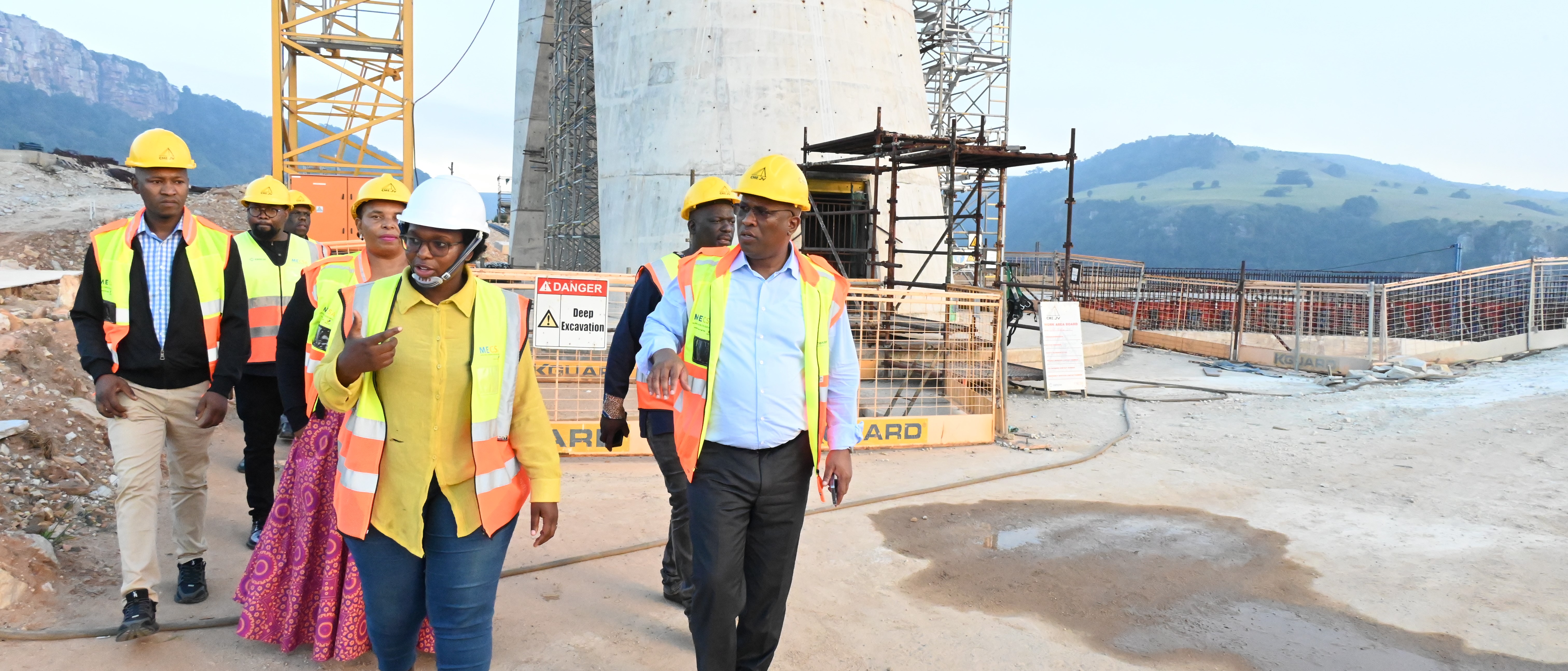
Our priority is to ensure that every infrastructure project in the Eastern Cape continues to create jobs and business opportunities for local businesses,” he said. In the road infrastructure projects, more than 7,500 people are employed, of which 3,400 are young people.
The support provided to micro, small and medium enterprises (MSMEs) and co-operatives by the Eastern Cape Development Corporation yielded 2,939 jobs. E-commerce is growing in the province and presents opportunities for entrepreneurs and job opportunities for the youth.
In addition, more people are now using Sixty60, UberEATS, TakeALot, Mr Delivery, Loot and TEMU to buy goods. Mabuyane said in partnership with digital platforms, organised business and municipalities, the government will train, licence, equip and onboard young people as last-mile delivery operators. The government is repurposing the Expanded Public Works Programmes (EPWP) to empower people with trade skills such as bricklaying, plumbing, welding and carpentry.
In 2025, public employment programmes implemented by government departments and municipalities created more than 103,000 work opportunities benefiting mostly women and young people. To date, 2,949 beneficiaries are participating in the National Skills Fund programme and are receiving their stipends.
A total of 2,000 of the beneficiaries are TVET College students who are doing experiential training, which is a prerequisite for them to graduate. KIA Motors, in partnership with Ingwe TVET College, is establishing a manufacturing and service plant in Ntabankulu within the college precinct.
Operations of the plant will entail manufacturing and assembling of some car components and servicing cars, among other things. Mabuyane said the completion of the Aliwal North Engineering Campus of the Ikhala TVET College in 2025, through an investment by the National Skills Fund, had significantly expanded access to quality engineering training, particularly for young people in rural communities.
MerSETA has partnered with AE Manufacturing in Gqeberha to skill, reskill and upskill more than 1,200 beneficiaries in critical trades such as shielded metal and coded welding. Through its Technical Excellence Academy, Sanral has supported 103 engineering graduates, and 55 of them are already registered with professional bodies. And in partnership with AIDCEC and MerSETA, the government implemented an Artisan Recognition of Prior Learning Programme (ARPL) for motor mechanics and panel beaters.
I am proud to announce that 46 mechanics have passed their assessments and acquired their Red Seal Certificate which signifies trade competence of an international standard and often leads to better jobs,” Mabuyane said.
The East London Industrial Development Zone (ELIDZ), through its science and technology park, is also making great strides in the development of skills in the province. Last year, the ELIDZ s skills development programme saw the training of 480 beneficiaries in future-facing skills such as computer-aided design, additive manufacturing, digital technologies, intellectual property, artificial intelligence and green hydrogen.
Additionally, the government is positioning the Eastern Cape to benefit from the R164bn Seta funds drawn from levy disbursements. Through the Eastern Cape Human Resource Development Council, the government is aligning skills priorities of the province to ensure success of applications for funding.
We take a decisive step to double our efforts to confront the crisis of young people who are not in employment, education or training by repurposing the Centre for Investment and Marketing (CIMEC) in the Eastern Cape as a dedicated and resourced training and skills development agency.
In partnership with municipalities, business and civil society, CIMEC will anchor learnerships, apprenticeships, internships and enterprise support to ensure that training and skills development translate into work experience, income and sustainable livelihoods for our young people,” Mabuyane said.
In 2025, the government awarded bursaries to 579 young people studying towards qualifications in high-demand fields, including engineering, medicine, agriculture, manufacturing, finance, science and information technology. Mabuyane said the government s drive for inclusive growth and job creation was also shaped by support to MSMEs.
A total of 2,078 black businesses benefited in Sanral s ongoing road construction to the tune of R20.5bn. The provincial government has spent R11.3bn on goods and services in the current financial year. Of this amount, R9.6bn (84.6%) was spent on designated groups.
Women-owned businesses benefited R6.6bn, youth-owned businesses got R2.3bn, businesses owned by people with disabilities got R379m and military veteran s businesses received R258m. In 2025, the Eastern Cape Development Corporation financed 302 MSMEs and 51 cooperatives, and the government has committed to leverage more resources to support 400 MSMEs and 60 co-operatives this year.
The work of the department of small business development has funded 39 co-operative projects in 2025. Co-operatives that benefited include Cingisita Agri-Business Primary Co-op in Amathole, Zamukurhila Farming and Construction Co-op in Chris Hani, and Siyalima Asidlali Co-operative in Alfred Nzo.
In 2025, the AIDC-EC approved and financed a total of 36 MSMEs with state-of-the-art equipment, diagnostic tools and hoists, assisting them to be competitive. The Isisa Motor Clinic in the Dr AB Xuma Municipality received its equipment, and Dent Boutique in the King Sabata Dalindyebo Municipality is also fixing cars with newly installed equipment provided by the government.
To address long-standing fragmentation between MSMEs, incubators, funders, academia and government, we welcome the establishment of the Young Businesses in Africa Seed Ecosystem Weaving Initiative, which is a partnership between the Eastern Cape Socio-Economic Consultative Council (ECSECC), Propella Business Incubator and the Nelson Mandela Bay Business Chamber.
Through this initiative, the parties are creating a network of support that expands access to mentorship, product development, markets, finance and visibility of regional role players.

