


Eastern Cape Premier, Lubabalo Oscar Mabuyane, addressed the World Food Programme meeting, which is currently underway at the East London International Convention Centre. The purpose of the meeting is to take stock on progress in Southern Africa thus far, in combating hunger and ensuring food security, as per the United Nations Developmental Goal 2 - which aims at achieving zero hunger by the year 2030.
In his speech, Premier Mabuyane said "Let me appreciate the UN World Food Programme for choosing our Province as the host of this all-important World Food Programme Bureau for Southern Africa Leadership Meeting. We are meeting here two days after the world observed World Food Day, an important day in the UN calendar that is used to raise awareness about global hunger. American Civil Rights Activist Dr. Martin Luther King once asked: Why should there be hunger and deprivation in any land, in any city, at any table, when man has the resources and the scientific know-how to provide all mankind with the necessities of life? There is no deficit in human resources. The deficit is in human will.
We want to thank the World Food Programme for the work it is doing around the world to feed people faced with hunger. We know that your work requires resources, and we are hopeful that first world economies will continue to fund UN World Food Programmes that are aimed at alleviating the poverty that is affecting millions of people around the world.
We were taken aback by the previous US administration of Donald Trump when it withdrew funding for UN Programmes for selfish political reasons. It our considered view that funding UN Programmes should never be used as a political bargaining tool and the UN should never be blackmailed by any nation to go against the values of human solidarity, social justice, and peace amongst the nations of the world. It is important when we meet in this fashion that we look at available data to have a clear picture of the challenge we are facing so that we come up with research informed solutions.
According to the UN, the number of people affected by hunger globally rose to as many as 828 million in 2021, an increase of about 46 million since 2020 and 150 million since the outbreak of the COVID-19 pandemic. Asia (418 million) and Africa (282 million) account for the most undernourished people in the world.
Here in our country South Africa and our Province of the Eastern Cape we can attest to these statistics as we see hunger in many of our communities every day. About 13.8 million (25 %) people in South Africa are experiencing food poverty and I am certain the number of people experiencing food poverty runs into millions in other SADC countries too.
As we meet here, I want us for a minute to forget about the statistics and put a human face to the challenge of food poverty that is happening in our respective SADC countries. I want us to picture an adult man searching for food in garbage bins or a woman begging with children in street corners in adverse weather conditions.
These fellow citizens of our countries are forced to embark on inhuman acts because of the pandemic of food poverty. Their stomachs yearn for a meal and in most cases, no one extends a helping hand to them. Sadly, some of us tend to be judgmental of our fellow citizens in such challenging situations because we are the privileged few that enjoys three meals a day.
I am certain that some of us in the room ignore a stranger who comes to our homes to ask for bread or at worse chase them away. That is the mindset we must change when dealing with other fellow human beings who are faced with hunger if we are to create a better world for all. As we meet here, I want us to take decisions that will address the plight of the men, women and children who go to bed on empty stomachs. We must move from theorizing to practical solutions because time is running out for us, if we are to meet the UN Sustainable Development Goal 2, which aims to achieve Zero Hunger by 2030.
Hunger is one of the challenges we should not have in Africa. Food comes from the land, and we have abundant fertile agricultural land across the African continent, particularly Sub-Saharan Africa, with favourable climate conditions. We should use this endowment for massive food production.
The anomaly of our economies is that we continue to export raw agricultural food produce and buy it back as finished products processed elsewhere in the world. Here in our province our grain is processed in KZN and the Free State and comes back as Maize Meal. Our province has the largest livestock population in the country (Cows, Sheep and Goats), but all that livestock is processed elsewhere.
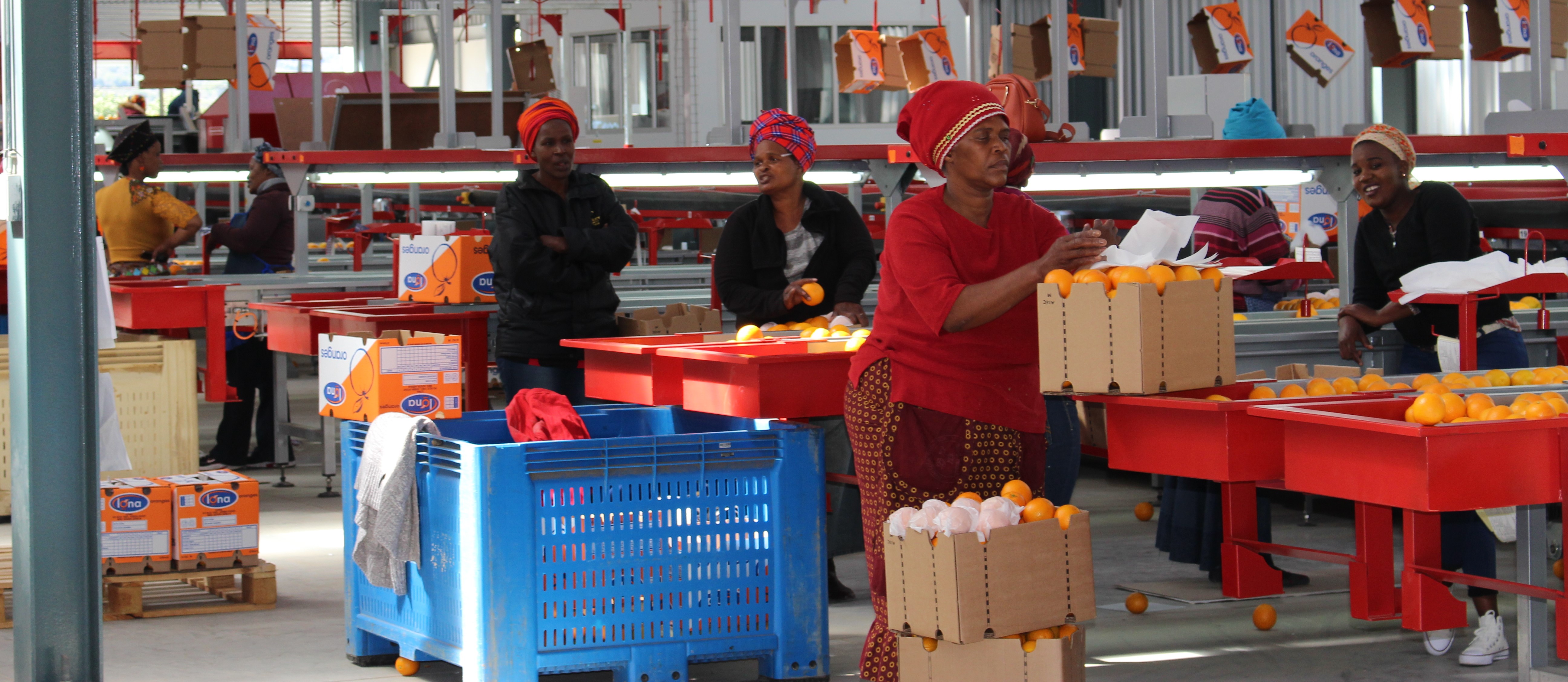
Our Province is also the second-largest citrus-producing province, but the largest quantities are exported in raw form. So, we are capable of not only ensuring food security for our country but also for the continent.
The core challenge we have is commercializing agricultural production particularly for black farmers. I am leading a government that understands that agriculture in the sustainable green mine of our province. As such, we continue to invest resources in agricultural infrastructure such as fencing, irrigation schemes, storage and share housing for small-scale farmers and cooperatives.
In the current financial year, we are allocated R134 million and R411 million over the MTEF for Producer Support Services to support commercialization in commodities such as grain, vegetables, fodder, chicory, citrus and pineapples production.
We also allocated R263 million in this financial year and R829 million over the MTEF for crop and livestock production. The budget is allocated to improve productivity on 28 529 ha of crop production by supporting farmers with grain production inputs and mechanization services. Included in this budget is the allocation to support 370 livestock enterprises to enhance herd productivity through distribution of improved genetic material to smallholder and communal farmers.
Knowledge and innovation are key for the creation of a competitive agricultural sector, thus we invested R185 million in the current financial year and R577 million over the MTEF for structured and vocational agricultural education and training. Having said all of that it is my strong view that Governments in SADC should increase budgets for primary agricultural production as the sector can create massive jobs for citizens and lead to more jobs in the agro-processing value chain.
The percentage of budgets allocated for agriculture are too low for the sector to increase its contribution to economic growth and job creation. As the leader of the Eastern Cape Provincial Government, I undertake to ensure that government increases the allocation for primary agricultural production, and this is the stance I will maintain throughout this term.
We welcome the partnership between DRDAR and the World Food Programme that will see the World Food Programme buying food from EC Farmers. We will increase our support to our farmers so that they produce adequate food supplies particularly for the WFP. Access to land for mostly the black population for food production and farming is a challenge that we are addressing through our land redistribution programme. It is a highly sensitive issue in South Africa that the ANC led government wants to put to finality.
We are also working with social partners to fight poverty, hunger, and malnutrition. Hunger and poverty affect women and children and we have programmes that are aimed at protecting these vulnerable groups of our society. Through the social assistance system, more than 19 million South Africans are able to put food on their tables every month. That is made possible by a budget of R248 billion. As a province we also invest R8 billion every year to poverty alleviation initiatives such as provision of meals to learners in our schools, food for patients in our hospitals and poor households through our work with NPOs.
We believe these massive financial resources can transform the economy, end poverty, and create sustainable jobs when they are channeled to primary food producers at a local level. That is why we are reviving what we call Industrial Parks in our province to be centers of agro-processing at a local level.
Our biggest worry is that the resources we spend on social assistance go straight to the big retail shops keeping the rich richer and leaving the poor poorer. We believe partnerships with developmental agencies such as the World Food Programme that have expertise can assist us to create the economic transformation we want in local communities through the agricultural sector.
In South Africa we are not short of ideas, it is the implementation that hampers our progress. Many times, ideas stall because people have interest in the tendering system so they frustrate any ideas that will temper with that system. But we are not fazed, we are going to use the law to drive transformation, fight poverty and unemployment using the financial muscle of government.
The progress we want to make to end world hunger is undermined by man-made challenges such as unnecessary conflicts. The Russia/Ukraine conflict should be another lesson for Africans to stop our overreliance on first world economies because when those economies sneeze, we catch the colds and suffer immensely.
The Russia/Ukraine conflict pushed energy and food prices up and that is not good for stability in developing countries. It is important that world leaders find a solution to that conflict. It is also important that we maintain peace and stability in the continent and focus on economic development partnerships and cooperation to lift our people out of poverty. This is the vision of a united Africa that our liberation heroes laid for us. We must fulfil the dream of Kwame Kruma, the brotherhood of Kenneth Kaunda and OR Tambo and Jomo Kenyatta who all believed on the ideal of a united Africa. The current generation must continue the work started by these liberation stalwarts and ensure the success of the African Continental Free Trade Area. The Africa Continental Free Trade Area presents us with an opportunity to create an economic block that would rival established economies of the world to end poverty and development in our continent. Our progress towards ending hunger is threatened by Climate Change. I don t know about other countries in the SADC region, but in our country, we have experienced extreme drought and floods that have posed a threat to food security. The sad part about climate change is that first world countries are the biggest contributors to global warming, but the impact is felt the most in our continent.
Our government has approved key climate actions including the creation of a Presidential Climate Change Coordinating Commission, South Africa's Low Emissions Development Strategy, a National Climate Change Adaptation Strategy, and a carbon tax.
Governments in the SADC region must encourage research by institutions of higher learning to develop innovative solutions for agricultural productivity that are not in conflict with the environment. The reality is that large scale agriculture contributes to climate change through methane, fertilizer emissions and land clearing. It is our hope that this leadership meeting will propose solutions to address these challenges of climate change.
As you go back to your countries after this session be reminded of the question asked by Dr Martin Luther King: Why should there be hunger and deprivation in any land, in any city, at any table, when man has the resources and the scientific know-how to provide all mankind with the necessities of life?"

